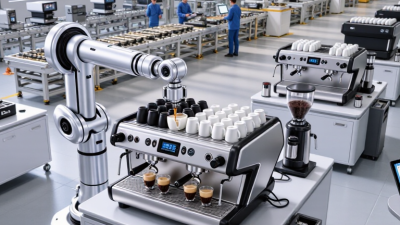
China Top 10 Coffee Bot Manufacturers for Global Buyers?
China has become a major source of automated coffee equipment for cafés, offices, hotels, and transport hubs. This guide introduces ten Coffee Bot manufacturers that global buyers may consider when planning a commercial purchase.
The selection focuses on manufacturing experience, product reliability, customization, and export support. It also considers brewing consistency, milk temperature control, cleaning systems, payment integration, and remote monitoring. Small details matter. A machine that serves 100 cups daily needs different engineering from a compact office model. Buyers should examine stainless-steel construction, grinder performance, water filtration, and maintenance access before requesting quotations.
Factory capability is only one part of the decision. International buyers should verify certifications, electrical specifications, warranty terms, spare-parts availability, and installation training. A supplier may offer an attractive price but provide limited after-sales support. That weakness can become expensive during peak service hours.
No ranking is perfect. Manufacturer strengths can change with new models, production capacity, and regional service networks. Therefore, this overview should support due diligence rather than replace it. Product demonstrations, sample testing, factory audits, and clear contracts remain valuable. Buyers should compare actual cup quality, cleaning time, software stability, and response speed before committing.
The following companies are presented as potential partners, not automatic choices. Each may suit different business environments, budgets, and operating volumes. A careful comparison can help global buyers choose a Coffee Bot that performs reliably and supports long-term commercial growth.
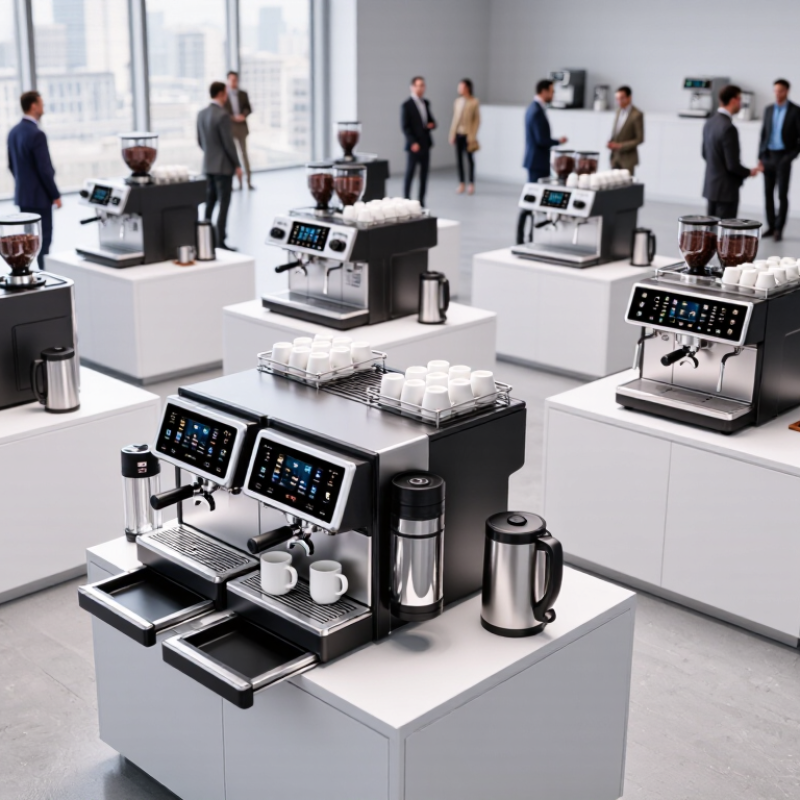
What Defines a Coffee Bot Manufacturer in China?
A coffee bot manufacturer in China is more than a company assembling a robotic arm beside an espresso machine. It should understand beverage preparation, mechanical control, software integration, and daily cleaning. Experienced teams test grinding, dosing, brewing, milk handling, and cup delivery under repeated service conditions. Small details matter. A loose cable can stop production.
Reliable manufacturers usually show working prototypes, factory processes, testing records, and clear technical drawings. They can explain food-contact materials, electrical safety, temperature control, and software updates without hiding behind vague promises. For global buyers, export experience also matters. Packaging, installation guidance, spare parts, language support, and remote troubleshooting affect the real cost of ownership. A supplier that documents these details earns more trust than one offering only attractive product videos.
Factory capability should be checked directly when possible. Ask for production samples, maintenance schedules, failure reports, and a realistic lead time. Some companies may have strong engineering skills but limited after-sales capacity. Others may offer polished demonstrations while relying heavily on outside contractors. That is worth questioning. No manufacturer is perfect, and an honest discussion of limits can reveal more than a confident sales pitch. Buyers should also verify current certifications and market requirements independently, because approvals may differ by destination and machine configuration.
Key Criteria for Evaluating Coffee Bot Manufacturers
China Top 10 Coffee Bot Manufacturers for Global Buyers?
Key Criteria for Evaluating Coffee Bot Manufacturers
Global buyers should evaluate coffee bot manufacturers beyond purchase price. The International Coffee Organization reported global coffee consumption at about 177.9 million 60-kilogram bags in 2023/24. This scale increases pressure on speed, consistency, and service availability. A capable manufacturer should provide verified output tests, stable temperature control, and clear cleaning procedures. Ask for hourly capacity under real operating conditions, not showroom figures. Small details matter.
Safety and reliability deserve practical inspection. The International Federation of Robotics recorded more than 541,000 industrial robot installations worldwide in 2023. Coffee automation is smaller, but the same concerns apply: emergency stops, guarding, electrical protection, and software stability. Buyers should request conformity documents and testing against relevant machinery safety standards, including ISO 10218 where applicable. Remote monitoring is useful, yet weak cybersecurity can create another risk. That point is often overlooked.
Total cost matters more than the invoice. Compare energy use, water consumption, spare-part prices, warranty length, and technician response times. Require a pilot installation with ordinary staff and peak-hour orders. Observe failed pours, refill delays, milk-system cleaning, and recovery after a power interruption. A manufacturer may promise 99% uptime, but the contract should define measurement conditions. My own concern is simple: a polished demonstration proves little. Long-term data from comparable sites is far more credible. Even strong suppliers can reveal weaknesses during deployment.
Profiles of China’s Top 10 Coffee Bot Manufacturers
China’s coffee bot sector includes robotic arms, automated brewing stations, delivery units, and compact kiosk systems. The ten manufacturers profiled here differ in hardware focus, software maturity, and deployment experience. Some build stainless-steel brewing modules for shopping malls. Others integrate robotic arms with grinders, espresso machines, and payment terminals.
Market evidence supports this expansion. The International Federation of Robotics reported 276,288 industrial robot installations in China during 2023, representing about 51% of global installations. Its World Robotics 2024 service-robot report also identified food preparation and hospitality as growing application areas. These figures do not prove every coffee bot will succeed. They show a strong manufacturing ecosystem and a large testing environment.
For global buyers, each profile should be checked against practical details: extraction consistency, milk-temperature control, cup-change speed, cleaning access, and remote diagnostics. A reliable supplier should provide trial videos, maintenance records, and measurable uptime data. Ask whether the system handles local voltage, water quality, payment standards, and spare-part delivery. Small differences matter. A two-minute cleaning delay can damage peak-hour capacity. The ten manufacturers may look similar in photographs, yet their internal pumps, sensors, software interfaces, and service teams can vary sharply. Some published performance figures may be optimistic, so independent site testing remains necessary. That part is often underestimated.
This comparative index summarizes the capabilities most relevant to global buyers when assessing Chinese coffee-bot manufacturers. Scores are normalized from 0 to 10 using a buyer-oriented framework covering automation, customization, deployment, support, and international readiness; no individual company or brand data is shown.
Technology, Customization, Pricing, and Production Comparison
For global buyers comparing China’s top ten coffee bot manufacturers, technology is more than a polished touchscreen. Reliable units combine calibrated grinders, stable brewing temperature, payment controls, remote diagnostics, and safe cleaning cycles. Ask for test data, not impressive demonstrations. A machine should maintain cup consistency during a busy morning. That matters. Some suppliers use modular brewing systems, while others prioritize robotic arms or compact countertop layouts. Each approach suits a different site, staffing model, and maintenance budget.
Customization can include recipes, cup sizes, language interfaces, exterior panels, telemetry, and payment-system integration. Confirm what is genuinely engineered in-house. A factory may offer many options but depend on outside assemblies. That can slow replacements. Request drawings, sample units, firmware update procedures, and service-response terms. I would also inspect a working production line, review quality records, and test water, milk, and bean handling under realistic conditions. Factory visits reveal details brochures hide.
Pricing comparisons should separate machine cost from installation, shipping, training, software, consumables, and spare parts. The lowest quotation is rarely the lowest ownership cost. Compare warranty duration, component life, energy use, and expected daily output. Production capacity also deserves scrutiny. Ask about monthly volume, lead times, incoming inspection, and final acceptance testing. One weakness remains: published output figures can be optimistic. Run a pilot order before scaling. That extra step costs time, but it can expose calibration drift, packaging damage, or unclear support responsibilities before a larger commitment.
China Top 10 Coffee Bot Manufacturers for Global Buyers: Technology, Customization, Pricing, and Production Comparison
| Manufacturer | Primary Coffee-Bot Type | Core Technology | Typical Output | Customization Capability | Cloud & Connectivity | Indicative OEM Price | Typical MOQ | Estimated Lead Time | Quality & Compliance Support | Best-Fit Buyer | Overall Benchmark |
|---|---|---|---|---|---|---|---|---|---|---|---|
| Manufacturer 01 | Fully automatic bean-to-cup kiosk | Integrated grinder, brewer, milk module, cup dispenser, and cleaning cycle | 60–120 cups/hour | High: enclosure, menu, payment interface, language, and logo options | 4G/Wi-Fi; remote inventory and fault monitoring | US$8,000–18,000 | 1–5 units | 45–75 days | CE documentation; electrical and food-contact files available by project | Retail chains, transport hubs, and unattended stores | ★★★★★ |
| Manufacturer 02 | Compact self-service coffee station | Automatic espresso extraction with modular soluble-ingredient dispensers | 40–80 cups/hour | Medium–High: front panel, recipes, screen graphics, and payment module | Wi-Fi; basic sales and machine-status dashboard | US$5,500–12,000 | 3–10 units | 35–60 days | CE support; HACCP-oriented operating documentation | Offices, hotels, schools, and small retail locations | ★★★★☆ |
| Manufacturer 03 | Robotic coffee preparation kiosk | Robotic arm or automated beverage workflow with programmable recipes | 50–100 cups/hour | Very High: robotic workflow, cabinet design, software logic, and beverage menu | 4G/Wi-Fi; API integration subject to project scope | US$15,000–35,000 | 1–3 units | 60–100 days | Factory acceptance testing; certification scope depends on destination market | Technology demonstrators, premium venues, and flagship stores | ★★★★★ |
| Manufacturer 04 | Commercial bean-to-cup vending machine | Fresh-bean grinding, pressure brewing, automatic rinsing, and refrigeration options | 45–90 cups/hour | Medium: branding, payment hardware, cup size, and recipe configuration | 4G/Wi-Fi; machine alerts and transaction reporting | US$7,000–16,000 | 5–20 units | 45–70 days | CE support; electrical safety and EMC test reports commonly available | Vending operators and convenience retailers | ★★★★☆ |
| Manufacturer 05 | Office coffee automation system | Bean grinder, instant beverage modules, automatic milk frothing, and portion control | 35–70 cups/hour | Medium: recipe software, branding, payment, and cabinet color | Wi-Fi; cloud reporting usually offered as an optional service | US$4,500–10,000 | 5–25 units | 30–55 days | CE support; cleaning and maintenance procedures included | Corporate offices, co-working spaces, and hospitality groups | ★★★★☆ |
| Manufacturer 06 | Outdoor and high-traffic coffee kiosk | Insulated cabinet, high-capacity water system, automatic brewing, and payment control | 70–140 cups/hour | High: weather-resistant housing, menu, payment, and service layout | 4G/Wi-Fi; remote monitoring and consumables alerts | US$12,000–28,000 | 1–5 units | 60–90 days | IP-rating options; destination-market certification must be confirmed | Outdoor retail, campuses, stations, and large venues | ★★★★☆ |
| Manufacturer 07 | Modular coffee vending platform | Replaceable brewing, payment, refrigeration, and ingredient modules | 50–110 cups/hour | High: modular hardware, interface language, menu, and payment integration | 4G/Wi-Fi; open data export available on selected configurations | US$6,500–15,000 | 3–15 units | 40–70 days | CE support; spare-parts lists and service manuals available | Distributors seeking flexible private-label platforms | ★★★★★ |
| Manufacturer 08 | Premium espresso automation station | Commercial espresso pump, precision dosing, automatic milk texturing, and self-cleaning | 40–85 cups/hour | Medium–High: beverage recipes, cabinet finish, display, and payment system | Wi-Fi; cloud features vary by software package | US$9,000–22,000 | 1–10 units | 50–80 days | CE support; component traceability available for qualified projects | Premium hotels, lounges, and specialty coffee locations | ★★★★★ |
| Manufacturer 09 | Entry-level automated coffee machine | Basic grinder-brewer unit with touchscreen operation and automatic rinse function | 25–60 cups/hour | Medium: labels, color, recipes, interface language, and payment options | Wi-Fi optional; local machine management is standard | US$3,000–7,500 | 10–50 units | 25–50 days | CE support subject to model; standard user and cleaning manuals | Small businesses, pilot programs, and budget-conscious distributors | ★★★☆☆ |
| Manufacturer 10 | Large-format smart coffee kiosk | Multi-beverage platform with refrigeration, payment integration, and automated cleaning | 80–160 cups/hour | Very High: kiosk structure, workflow, software, payment, and regional menu | 4G/Wi-Fi; dashboard, alerts, analytics, and optional API connection | US$18,000–45,000 | 1–3 units | 75–120 days | Factory testing; CE and other market approvals require project confirmation | National rollouts, hypermarkets, and high-volume commercial sites | ★★★★★ |
How Global Buyers Can Select and Source the Right Manufacturer
Selecting among China’s leading coffee bot manufacturers requires more than comparing online rankings. A reliable shortlist starts with verified production capacity, engineering depth, and export experience. Ask for factory videos, current certifications, and references from similar installations. A polished demonstration can mislead. Request a live test using your coffee beans, cup sizes, recipes, and peak-hour workload.
Examine the machine closely. Check stainless-steel contact surfaces, dosing accuracy, brewing temperature, cleaning time, and average cycle length. Ask how the system handles milk, waste water, software updates, and unexpected shutdowns. Request test data, not only brochures. Test the cleaning cycle. It often reveals weak design choices.
Sourcing also depends on communication and after-sales support. Confirm minimum order quantities, spare-parts availability, packaging standards, warranty coverage, and response times. Your contract should define factory acceptance testing, delivery terms, installation training, and replacement procedures. Request compliance documents for your destination market, because requirements differ by country. A supplier that answers quickly may still lack technical depth. A lower price may hide costly maintenance. Compare total ownership costs over three years, including filters, consumables, labor, and downtime. No checklist is perfect. Leave room for pilot orders, independent inspections, and honest feedback from operators before committing to a larger purchase.
Related Posts
-
China Top 10 Robot Coffee Maker Manufacturers?
-
7 Barista Bot Tips for Global Coffee Equipment Buyers
-
What Is a Robot Barista for Sale and How Does It Work?
-
How to Choose a Robotic Barista Coffee Machine?
-
How to Choose the Best Barista Robot for Your Coffee Needs in 2023
-
How to Choose the Best Robot Coffee Maker for Business?